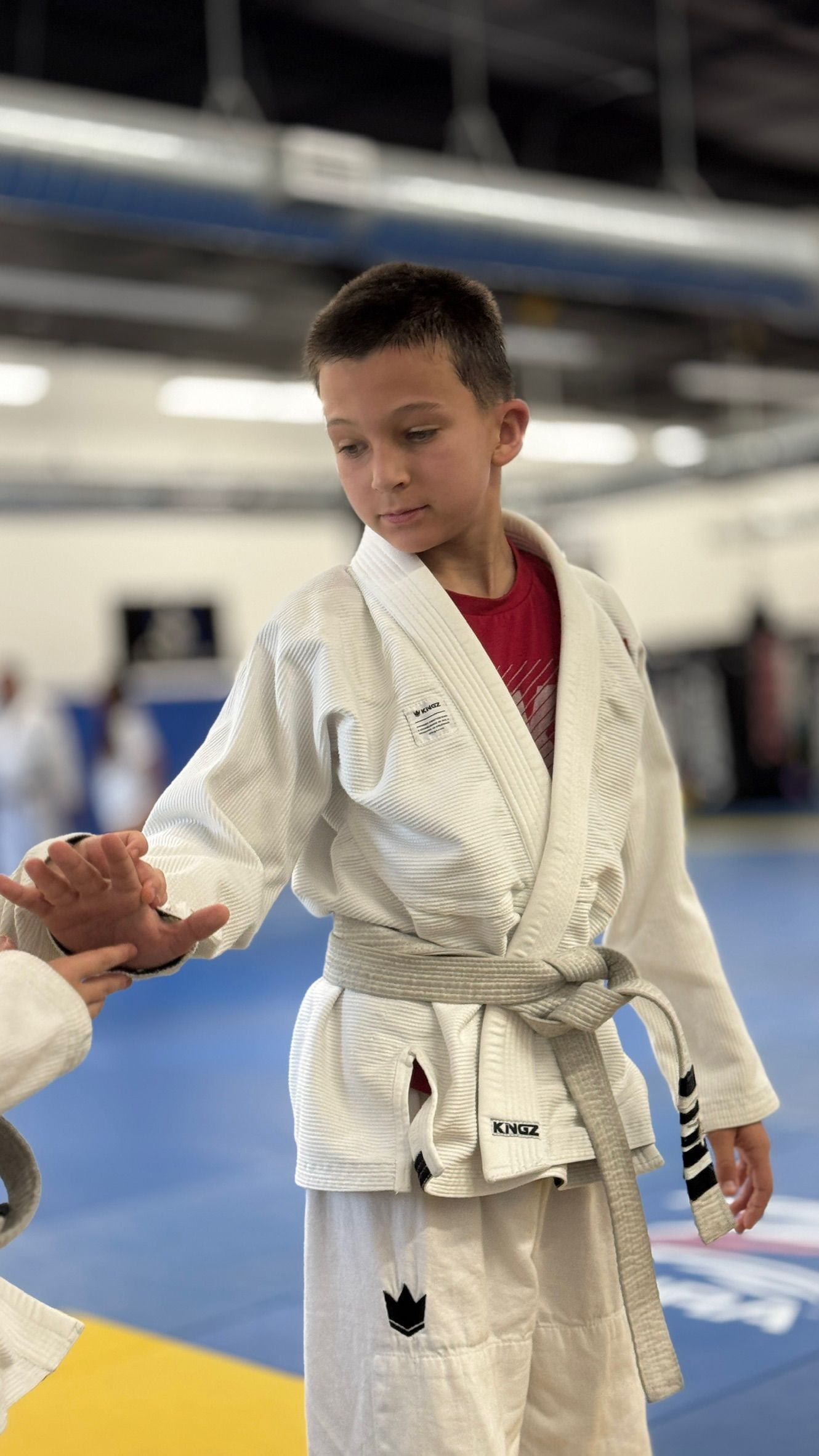
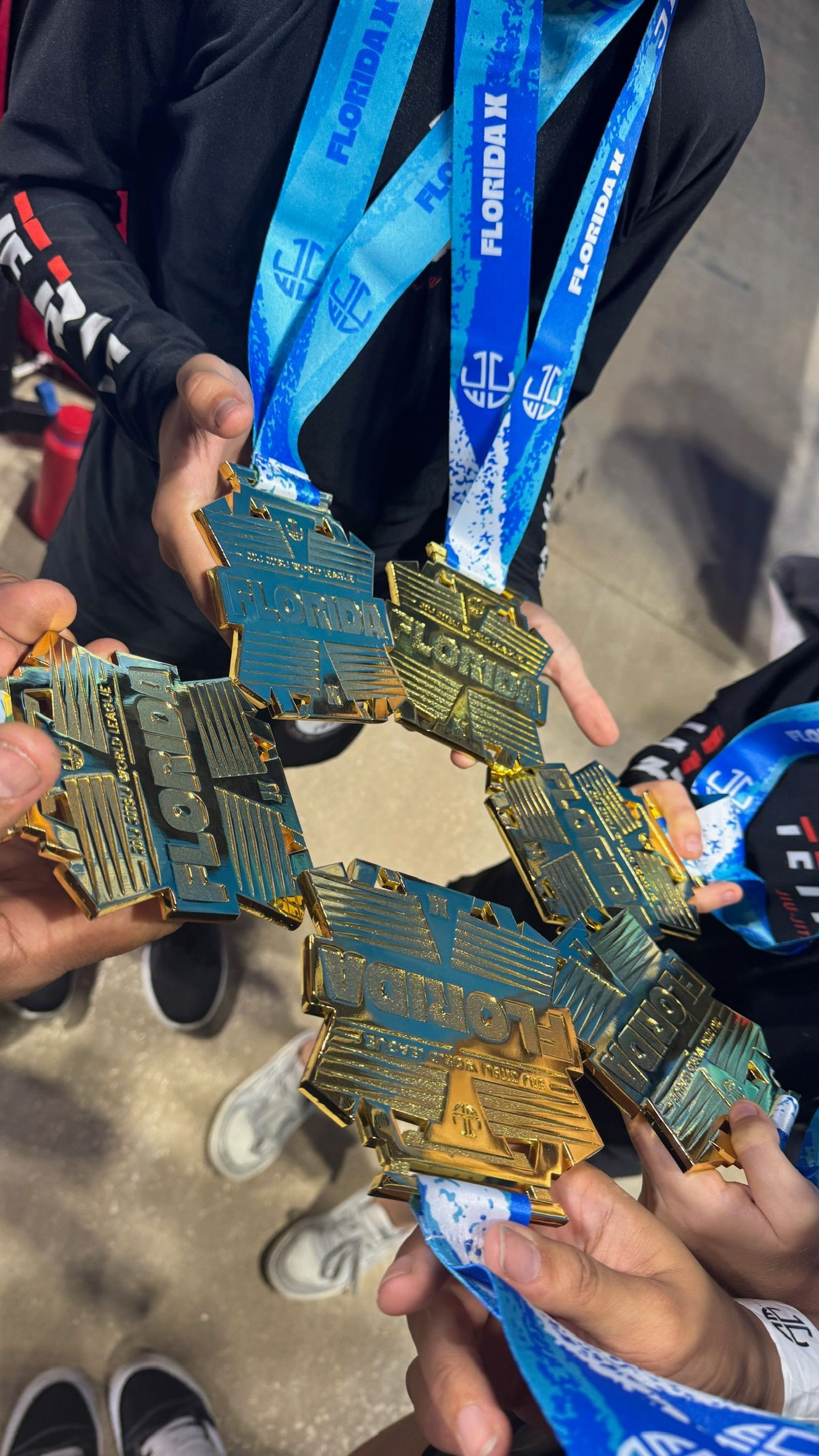
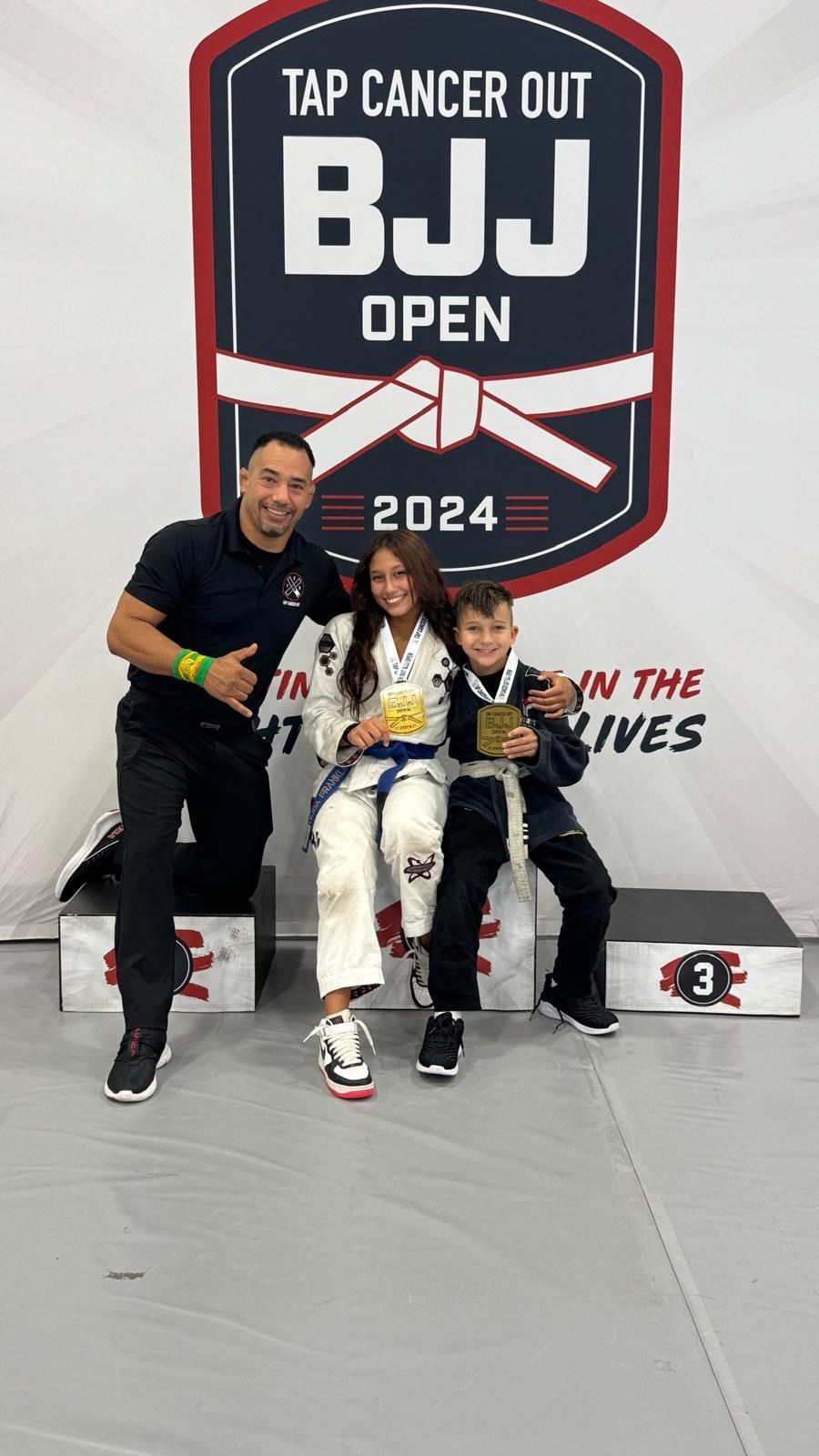
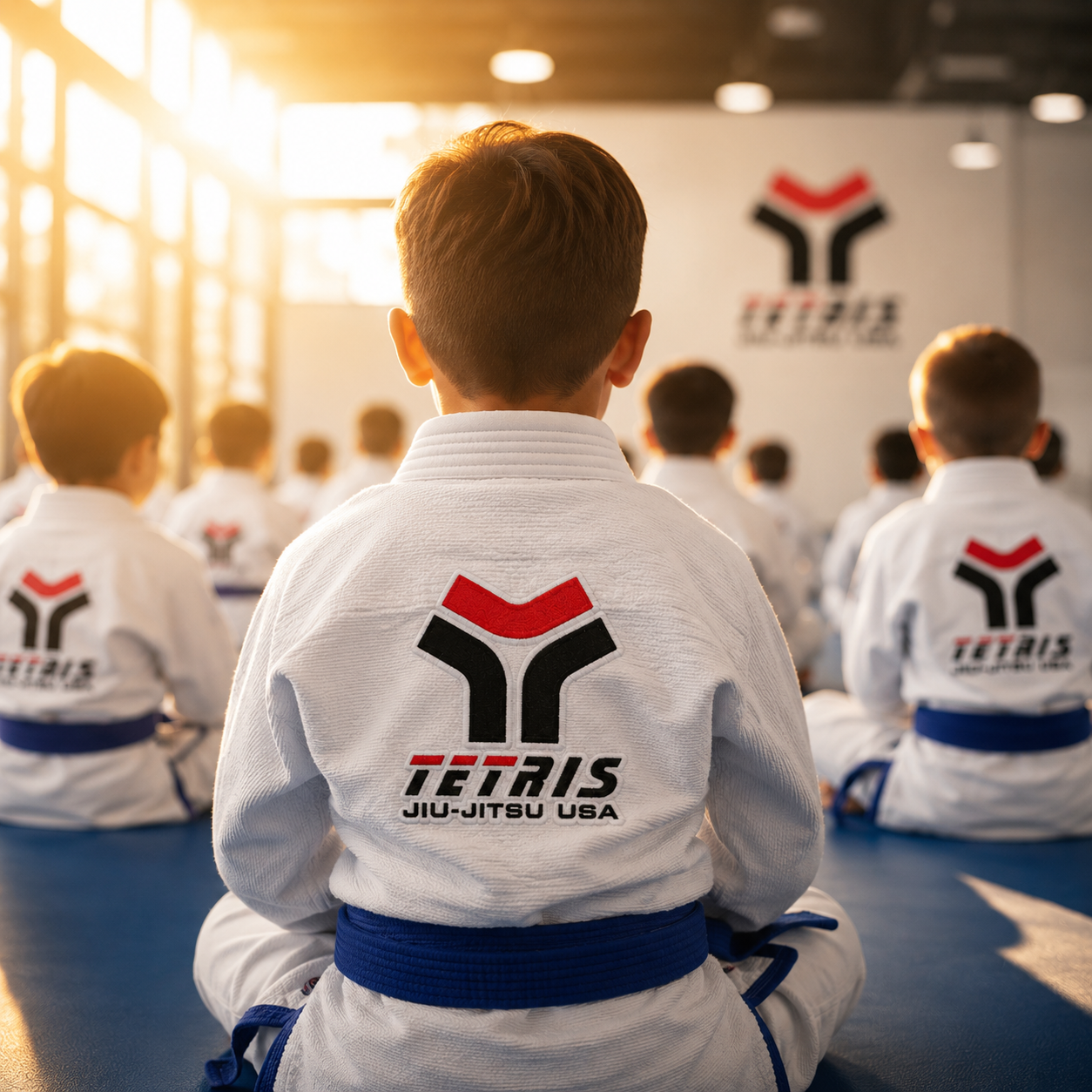
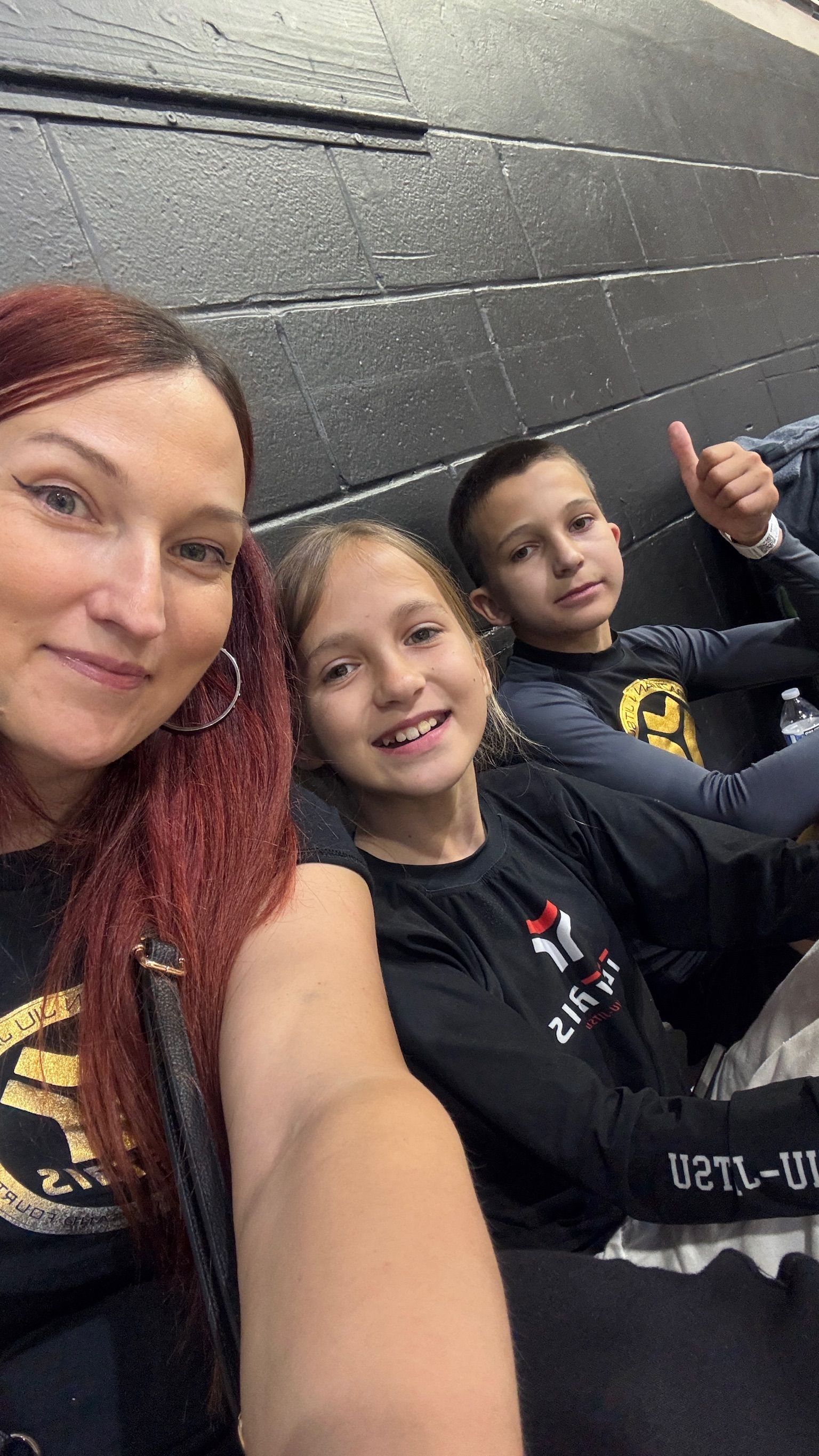
Real confidence shows up when your child can stay calm, think clearly, and try again even after a tough moment.
If you are exploring Young Brazilian Jiu-Jitsu for your child, you are probably not just looking for a place to burn energy. Most Orlando parents want something deeper: better focus at school, steadier emotions at home, and a sense of confidence that does not disappear the first time life gets uncomfortable.
Our experience is that confidence is not a speech you give a kid or a trait you either have or you do not. Confidence is built through small, repeatable wins. Young Brazilian Jiu-Jitsu works so well because those wins are built into the training itself: learning a new movement, solving a position, staying patient, and improving week by week.
There is also strong evidence behind what families often notice. Research on Brazilian Jiu-Jitsu participation shows that 87.6 percent of participants report improved confidence, and many also report stronger discipline, focus, and emotional balance that carries into everyday life. That is exactly the kind of growth we aim to build on the mat and reinforce off it.
Why Young Brazilian Jiu-Jitsu builds a different kind of confidence
A lot of activities build outward confidence: cheering crowds, scoring points, being the fastest or strongest in the group. Young Brazilian Jiu-Jitsu builds inward confidence, the kind that helps your child handle pressure without falling apart. On the mat, kids learn that panic makes everything harder, and calm makes everything possible.
Because Brazilian Jiu-Jitsu is a grappling art, students constantly practice problem-solving in real time. A position changes, an opponent shifts weight, and your child has to make decisions: posture, base, frames, grips, timing. This becomes a mental habit. Over time, our students start to treat challenges like puzzles instead of emergencies.
That mental habit matters for teens especially. School stress, social dynamics, and constant digital noise can push teenagers into overreaction or avoidance. When we train Young Brazilian Jiu-Jitsu consistently, we teach teens to pause, breathe, and execute. That is not just a sports skill. That is a life skill.
Skill-based self-esteem: confidence you can actually measure
One reason Young Brazilian Jiu-Jitsu is so effective is that progress is visible. Your child learns a technique, practices it, and then sees it work in a controlled setting. That feedback loop creates earned confidence, not inflated confidence.
We structure classes so students can feel progress without being thrown into situations that overwhelm them. A new student might start by learning how to move safely on the ground, how to stand with balance, and how to control distance. Those basics seem simple, but for a kid who has never done a grappling sport, they can be a big deal.
As students improve, they typically notice changes like these:
- Better coordination and body awareness, especially in transitions like standing to the ground and back up
- Increased comfort with close contact and pressure, which often reduces nervousness in other environments
- Stronger attention span during instruction because technique requires details
- A clearer sense of personal capability because improvement is earned, not gifted
This is why confidence from training tends to stick. It is attached to real competence.
Calm problem-solving under pressure: the hidden superpower
In Young Brazilian Jiu-Jitsu, pressure is part of the learning environment, but it is introduced in a safe, progressive way. Kids learn what it feels like to be stuck, and then learn how to get unstuck. That sounds small until you see what it does to a child’s mindset.
A common moment in class looks like this: a student gets placed in a less favorable position, pauses, breathes, and works a simple escape step by step. No drama, no panic. That calm problem-solving is exactly what we want to build, because it transfers to real life.
When your child can stay calm during sparring, it becomes easier to stay calm during:
- A difficult test at school
- A conflict with a friend
- A mistake that would normally trigger embarrassment
- A new situation where confidence is usually shaky
We do not need kids to be aggressive. We need kids to be steady. Young Brazilian Jiu-Jitsu trains steadiness.
Emotional regulation: learning to recover from mistakes quickly
Kids and teens do not need to be perfect. They need to learn what to do after things go wrong. One of the most practical benefits of Young Brazilian Jiu-Jitsu is emotional control: learning to notice frustration, reset, and keep going.
On the mat, mistakes are normal and frequent. A grip slips. A sweep fails. A student forgets a step. The environment is designed so mistakes are not a crisis, just information. That framing helps kids build a healthier relationship with challenge.
Over time, we often see students:
- Become less reactive when corrected by an instructor
- Handle losing positions without shutting down
- Speak up more confidently because training normalizes being a beginner
- Bounce back faster after a tough round or a tough day
There is also an important mental health angle. Trends in current research and coaching practice increasingly recognize Brazilian Jiu-Jitsu as supportive for psychological well-being, including reduced anxiety and improved mood. Our goal is not to replace professional care, but to provide a structured, positive place where kids can practice emotional balance in real time.
Leverage over strength: why smaller kids often thrive
One of the most parent-friendly truths about Young Brazilian Jiu-Jitsu is that technique matters more than size. That changes everything for smaller kids, kids who feel physically behind their peers, or teens who have never felt athletic.
In class, we teach mechanics: angles, timing, posture, and leverage. When a student learns that good positioning can neutralize strength, confidence shifts. Your child stops thinking, “I cannot,” and starts thinking, “I can learn how.”
This approach also supports a healthier mindset around conflict. We emphasize control, awareness, and smart choices rather than aggression. If your concern is that martial arts might make your child “more fighty,” our experience is usually the opposite. When kids feel capable, they tend to act less threatened, and that often means less impulsive behavior.
Resilience and work ethic: the long-game confidence
Confidence that lasts is built through consistency. Young Brazilian Jiu-Jitsu rewards showing up, listening, practicing, and being willing to struggle a little. That struggle is not a punishment. It is the training effect.
Resilience grows when students experience challenge in a controlled environment and learn that they can handle it. A student might struggle with a technique for a few weeks, then suddenly it clicks. That moment teaches patience and persistence better than a lecture ever could.
We also pay attention to how we introduce intensity. We progress students gradually, because resilience is not built by overwhelming someone. It is built by giving them something hard but doable, then helping them take the next step.
Community and respect: confidence is easier with support
Confidence is personal, but it is not built alone. In youth classes, the social environment matters. Students learn to partner up, follow safety rules, and treat training partners with respect. That respect is not optional because safe training depends on it.
Studies on Brazilian Jiu-Jitsu participation show that 100 percent of participants in one research sample reported a strong sense of community and increased respect for others. That lines up with what we aim to create every day: a space where kids feel supported while still being held to clear standards.
For shy kids, that community structure can be a turning point. Young Brazilian Jiu-Jitsu gives shy students a role and a routine. They do not have to invent confidence from scratch. They build it through repetition and belonging.
What parents in Orlando usually ask us first
Orlando families are busy, and you want real answers before committing your time. These are the questions we hear most often, and the way we approach them.
Is Young Brazilian Jiu-Jitsu safe for kids?
Safety starts with class structure. We keep training age-appropriate, focus on technique, and build intensity gradually. Kids learn how to move, fall, and control positions before anything becomes fast or chaotic. We also set clear rules around partner safety, tapping, and listening to coaches.
What age can my child start?
Many children can start around three years old, as long as maturity and attention span fit the class environment. The key is not the number. The key is whether your child can follow directions, participate safely, and stay engaged.
Will this help my shy child?
Yes, and usually in a gentle way. Young Brazilian Jiu-Jitsu gives shy kids structure, clear expectations, and repeated practice speaking up in small moments like asking questions, finding a partner, and learning names. Confidence grows without forcing the spotlight.
Can it help with school behavior and focus?
We often see improvements because the mat teaches self-control and attention to detail. Kids practice listening, following steps, and managing frustration. Those skills can carry into homework routines, classroom behavior, and social interactions.
How our youth program builds confidence step by step
We want you to know what “confidence training” actually looks like, not just how it sounds. Our youth classes are designed to build ability first, because ability is what creates calm.
Here is the progression we use most often:
1. Foundations of movement and safety, including balance, coordination, and how to protect yourself in transitions
2. Basic positions and control concepts, so students understand where they are and what they are trying to accomplish
3. Simple escapes and reversals that teach problem-solving and reduce panic when things feel stuck
4. Structured partner drills that build timing and trust without overwhelming pressure
5. Controlled sparring for students who are ready, emphasizing composure, decision-making, and respect
This is why Young Brazilian Jiu-Jitsu works for both energetic kids and thoughtful kids. The training meets your child where your child is, then steadily raises the bar.
A parent’s guide: supporting confidence outside the gym
The fastest growth happens when training and home life reinforce each other. You do not need to be a martial artist to help. A few small habits make a big difference.
• Ask process questions instead of outcome questions, like “What did you practice today?” instead of “Did you win?”
• Praise calm effort, especially after mistakes, because recovery is the real confidence skill
• Keep attendance consistent when possible, since long gaps can make kids feel like beginners again
• Let your child own small responsibilities like packing gear and arriving on time
• Use the language of problem-solving at home, such as “What is the next best step?”
If you take one thing from this section, let it be this: confidence grows when your child learns to trust your child’s own ability to handle hard moments.
Take the Next Step
If you want your child to gain calm problem-solving, emotional control, and resilience, Young Brazilian Jiu-Jitsu is one of the most practical ways to build those skills in a structured environment. We see confidence grow through measurable progress, respectful training partners, and a coaching approach that rewards patience as much as performance.
When you are ready, we would love to help you explore training at
Tetris Jiu-Jitsu here in Orlando, FL, and guide your family toward a routine that supports your child’s growth on the mat and in everyday life.
Experience how
Brazilian Jiu-Jitsu builds resilience, focus, and lifelong confidence at Tetris Jiu-Jitsu.